How do you attract customers to a cafe or bakery when there are dozens of identical places around you selling the same pastries? We collected thirteen real stories where owners did something simple and managed to stand out from the competition. They didn’t need marketers or money for social media ads. One simple idea was enough.
1. Krispy Kreme: the “Hot Now” sign
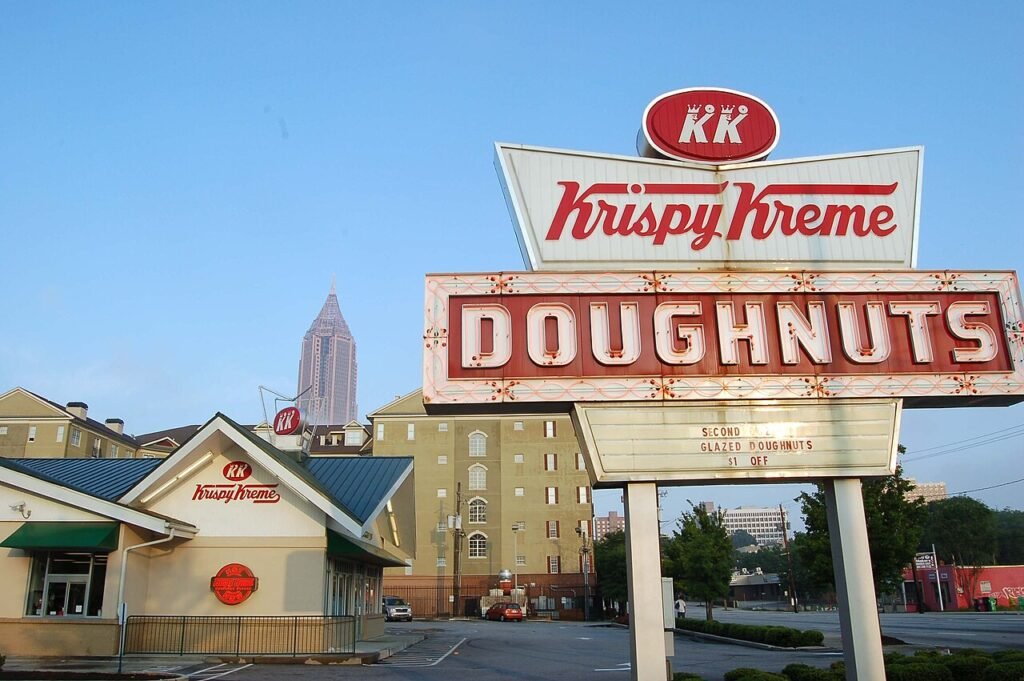
In 1937, the founder of Krispy Kreme was making doughnuts for grocery stores, and the smell drifted out into the street. Passers-by kept stopping and asking to buy them hot. So he cut a hole in the outside wall and started selling doughnuts right onto the sidewalk.
The chain’s signature idea came from a long-time employee, Bob Glidden: a plain white window shade with red letters. While doughnuts were frying, the shade was lowered; when frying stopped, it went back up. Later the shade was replaced with a neon sign. When the sign is lit, it means one thing: fresh doughnuts are being made right now.
What to take from it. A hot khachapuri and a cold one are two different products, and customers know it. A simple “Fresh out of the oven” sign already works. You can go further and hang a board like the ones in the metro: “Next batch in 4 minutes” or “Baked 5 minutes ago”. This means baking in small batches, but small batches are exactly what keep hot pastries on the counter all day.
2. Cinnabon: smell instead of advertising
Cinnabon bakes its rolls every 30 minutes. The ovens are placed at the front of the store so the smell reaches people walking by. According to the Wall Street Journal, between batches the staff warm trays of sugar and cinnamon to keep the aroma in the air longer. And McDonald’s in the Netherlands once put up blank billboards that smelled of French fries, and 87% of passers-by recognised the brand by smell alone.
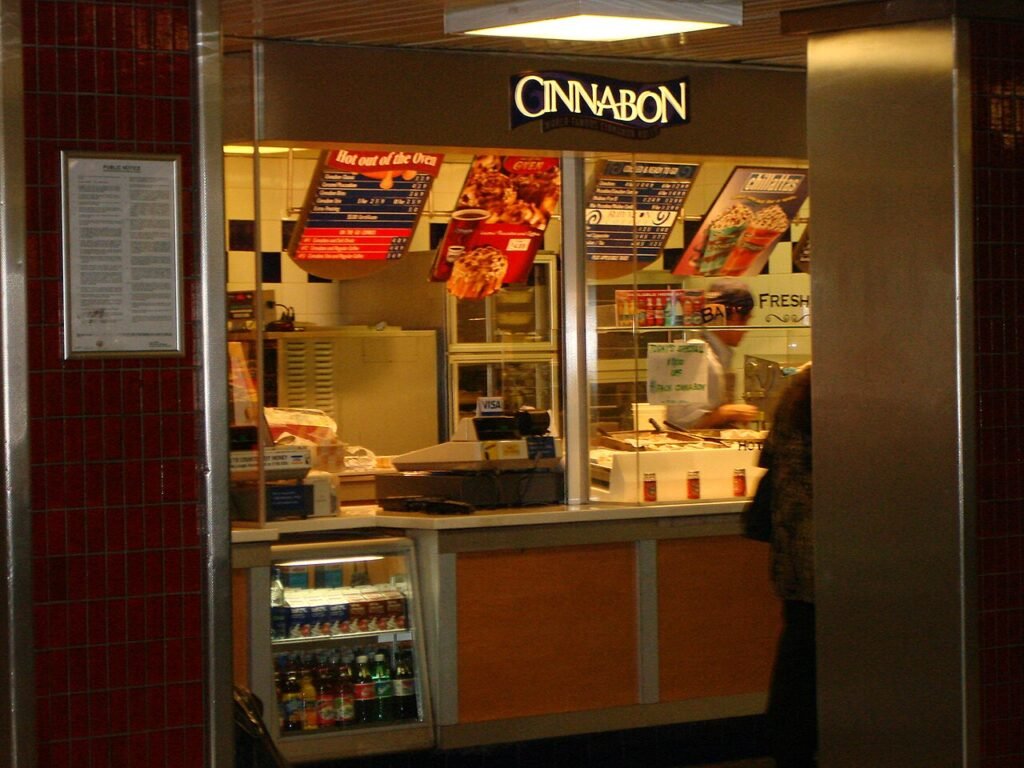
What to take from it. Keep the oven in sight, by the display window. If regulations and neighbours allow, point the extractor fan towards the sidewalk: the smell of hot pastry calls people in by itself. An even easier option is to buy a fresh-baking scent and spray it near the entrance from time to time.
3. Auntie Anne’s: a bite to try
In 1988, Anne Beiler opened a stand at a farmers’ market in Pennsylvania. Her first pretzels, made from a friend’s recipe, sold poorly: about $350 a weekend. When a supply delivery fell through, she spent around two months experimenting with the recipe, and her husband suggested a couple of the ingredients.
To introduce people to her pretzels, she handed them out free to passers-by right at the stand. That later grew into the chain’s Free Pretzel Day. When the chain moved into shopping malls, three things drew customers in: the smell of baking, pretzels being rolled in plain view, and free samples.
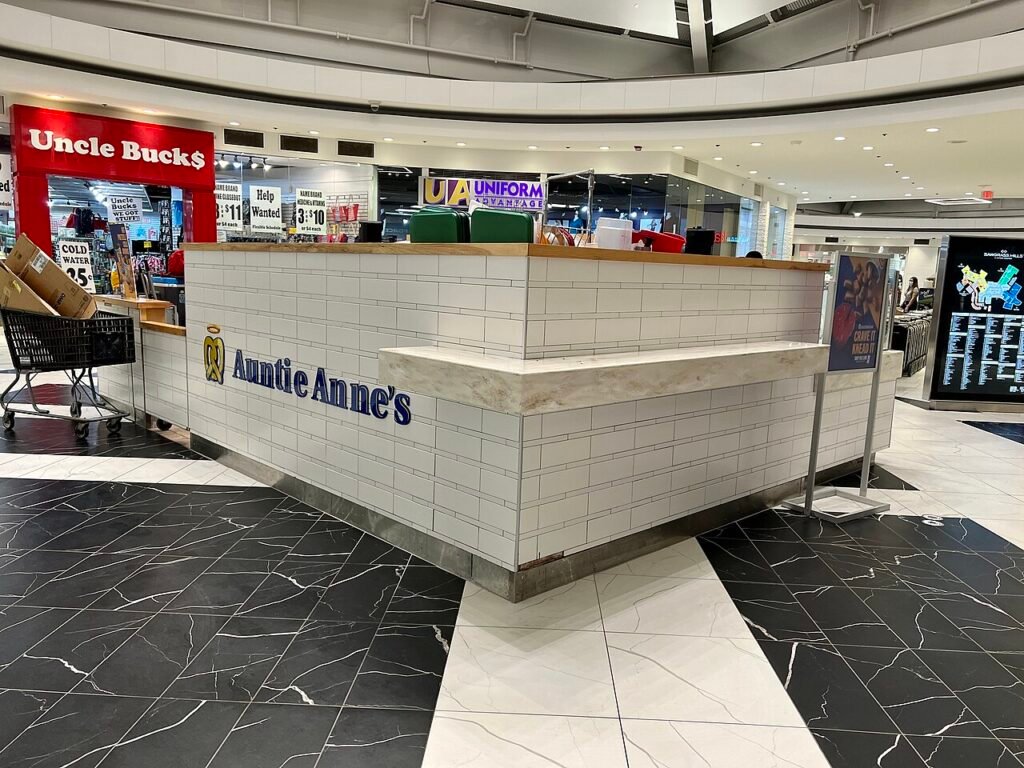
What to take from it. Someone who has never eaten at your place won’t risk even a couple of lari. A free bite removes that fear. It works especially well with new items: if you’ve come up with a new filling, cut it up and hand it out to passers-by. You’ll see right away whether people like it, and those who do have a reason to come back as customers.
4. Pizza Bib: a box you can “dress up” in
One day, the founder of the Australian company Pizza Bib, Jack, ordered his favourite pizza after a few beers. He was wearing a brand-new T-shirt, so to keep it clean he used the ordinary pizza box as a bib. Then it hit him: if the box had fun designs printed on it, you could stay clean and have a laugh at the same time.
The team spent a couple of years on patents and testing before going to market. Every box has a built-in, patented perforated bib: you tear it off, put it on and eat your pizza. The pizzeria orders its own design for the bib, so its brand ends up in every customer photo and video. Pizza Bib itself invites people to take a photo wearing the bib and tag its account for a chance to win a free pizza. In one of the testimonials on the company’s website, a pizzeria says the box gave it an edge over competitors and helped it reach a younger audience.
What to take from it. Packaging can be a stage too. Come up with your own shape, colour and style, and a game around them. Megruli khachapuri is sold in boxes, just like pizza. A chef’s, firefighter’s or astronaut’s costume printed inside turns every purchase into a funny photo. And a “post a selfie, win a khachapuri” contest spreads that photo across social media.
5. Jay Fai: your own look
Jay Fai, whose real name is Supinya Junsuta, worked as a seamstress for many years until she lost everything in a fire. In 2018 her eatery in Bangkok received a Michelin star.
According to her, the ski goggles came after eye surgery: she started wearing them to protect her eyes from the fire. The goggles became her trademark. People were gathering to watch her cook long before the Michelin star.
What to take from it. Almost everywhere, bakers wear the same white uniform. You can have your own made: a bright hat, goggles, patches, an alien or chicken costume. Then name the place to match the look, for example “Khachapuri from Mars”. People will start saying: “Let’s go to the aliens.”
6. Big Chicken: becoming a landmark
The most famous chicken in Georgia — the American state, that is. Stanley “Tubby” Davis opened his fried chicken restaurant in 1956, and in 1963 he had a 17-metre chicken built on top of it as advertising. The eyes and beak were supposed to move, but the mechanism was built so badly that turning it on would break the restaurant’s windows.
Davis later said he built it as high as he could to attract customers and never expected it to become a landmark. Yet phrases like “turn left at the Big Chicken” became part of everyday speech.
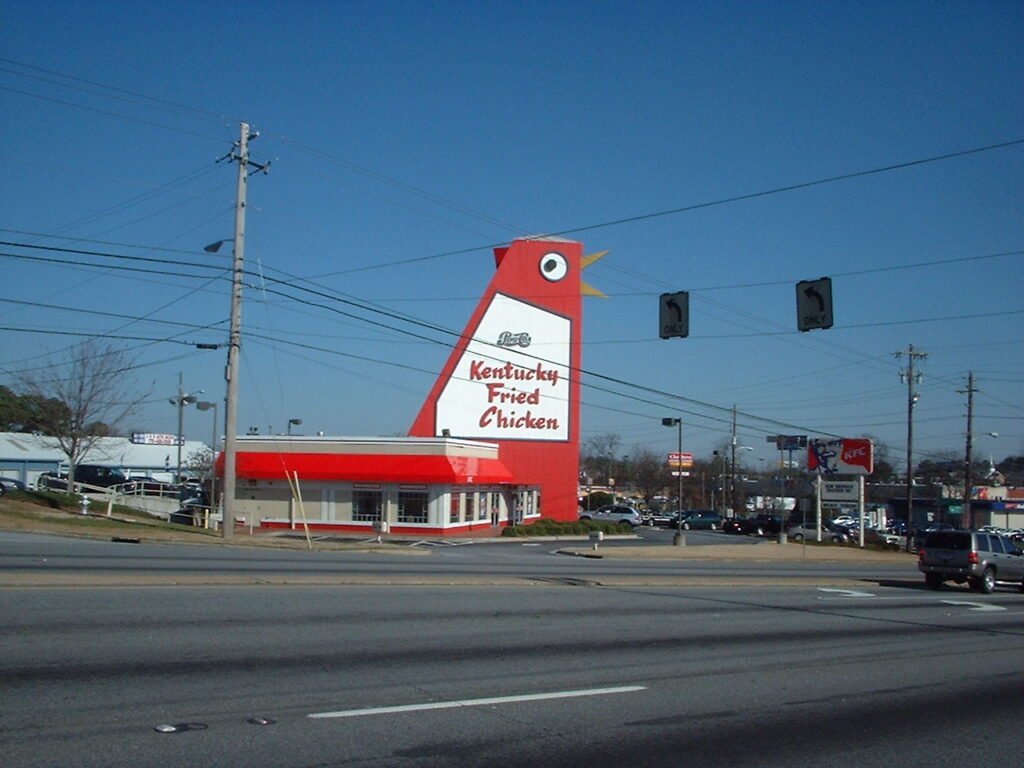
What to take from it. The point isn’t the size, but the fact that people started using the place to give directions. An unusual colour for your stall, a figure on the roof, a bright detail that makes people say “let’s meet by that khachapuri place”. Every set of directions like that brings in new people. For a large-scale version of a building working as an ad, see the story of Marqués de Riscal, a hotel that sells wine.
7. Jo’s Coffee: a place for photos
One night, musician Amy Cook painted “i love you so much” on the wall of Jo’s Coffee in Austin. It was a note to her girlfriend, the owner of the cafe. The words became one of the symbols of the neighbourhood. People line up to take photos in front of it, and visitors come from all over the world. We looked separately at 12 cafes that took off thanks to a photo spot: what they put outside and what came of it.

What to take from it. A spot where people want to take a picture turns every guest into your photographer. You don’t need to paint a whole wall; one small photo spot is enough: a mirror by the entrance, a bathtub full of flowers, a life-size box like a Barbie doll’s. The key is not to repeat what dozens of others have already done. Look up photo spots of other cafes online, figure out what makes them catchy, and come up with your own.
8. Big Texan: the 72-ounce challenge
Bob Lee opened the Big Texan steakhouse in Amarillo in 1960. According to the restaurant itself, a cowboy walked in and claimed he could eat anything Lee put in front of him. Lee took him up on it, and so the challenge was born: anyone who eats a 72-ounce (about 2 kg) steak with the sides in an hour eats for free.
In the middle of the dining room there’s a separate table on a raised platform, so the whole restaurant watches each attempt. Those who fail pay $72, and the names of the winners are displayed in the restaurant. According to the restaurant, today there are more than 3,000 attempts a year, and about 10% succeed.
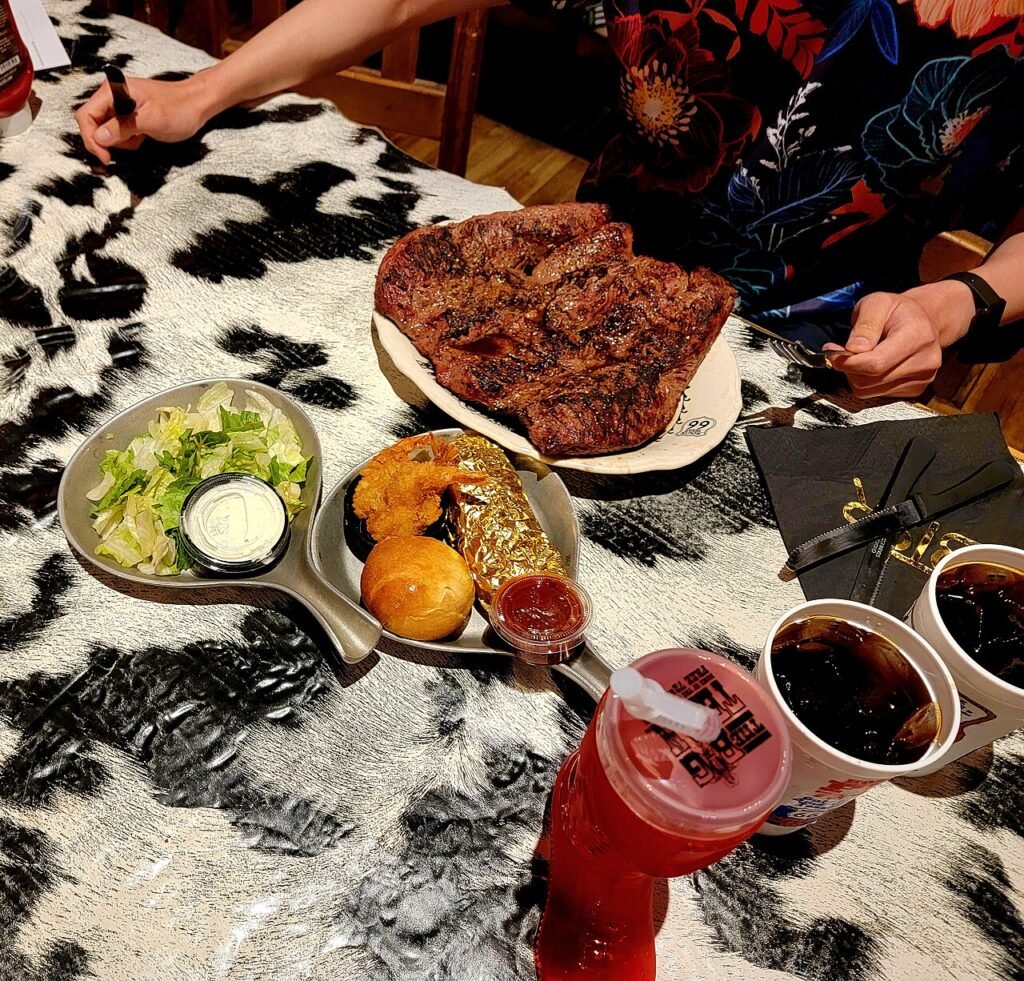
What to take from it. A giant Imeruli or Lobiani “against the clock” and a board with photos of those who managed it. Every attempt is a show for passers-by, and the winner will bring friends to see their photo.
9. Taco John’s: your own day of the week
The owner of a single Taco John’s location in Wyoming wanted to liven up the slowest day of the week and came up with “Taco Twosday”, a play on words: two tacos for 99 cents. The promotion was so popular that it spread to other locations in the chain. By 1989 it had been renamed “Taco Tuesday” and the name was registered as a trademark.

What to take from it. Give a name to your slowest day, or plan the whole week: “Imeruli Tuesday”, “Lobiani Wednesday” and so on, each day with its own product at a discount. A ritual is easier to remember than a discount.
10. Rosa’s Fresh Pizza: the sticky-note wall
Mason Wartman left Wall Street and opened a pizzeria in Philadelphia where a slice costs $1. He named it after his mother. One day a customer left an extra dollar to pay for a slice for someone who couldn’t afford one. Wartman drew a smiley face on a sticky note and stuck it on the wall so he wouldn’t forget.
The system is simple. A customer pays for their own slice plus one dollar extra, and a sticky note goes up on the wall. Anyone without money can take a note, hand it in at the counter and get a slice for free. The walls filled up with colourful notes, and when the story was shown on TV, queues formed outside the pizzeria. Prepaid slices grew to about 10% of the business.
What to take from it. A “pay-it-forward khachapuri”: a sticky note on the display window for every one paid in advance. The glass covered in notes is visible from the street, people stop to read them, and the place becomes somewhere people talk about.
11. In-N-Out: the secret menu
According to the company, it all started when a customer saw an employee putting together a burger for himself and asked for the same thing: with mustard, pickles, grilled onions and extra spread. The order was passed on by word of mouth — legend has it, among local surfers. That’s how the “secret menu” appeared, with items that aren’t on the menu board. Later the company itself posted a “Not So Secret Menu” on its website.

What to take from it. A khachapuri that isn’t on the sign or in the display. It’s kept separately, in a basket under a towel, and only given to those who ask for it. To get the word out, a couple of Facebook posts and word of mouth through friends is enough at first. It works well when regulars ask out loud right in the queue: “Is the secret one available today?” Others hear it and want to know what it is.
12. McDonald’s: the counter on the sign
The very first McDonald’s, opened on 15 April 1955, already had a sign that read: “Hamburgers. We have sold over 15 million”. The number was updated for decades and stopped in 1994 at “over 99 billion”.
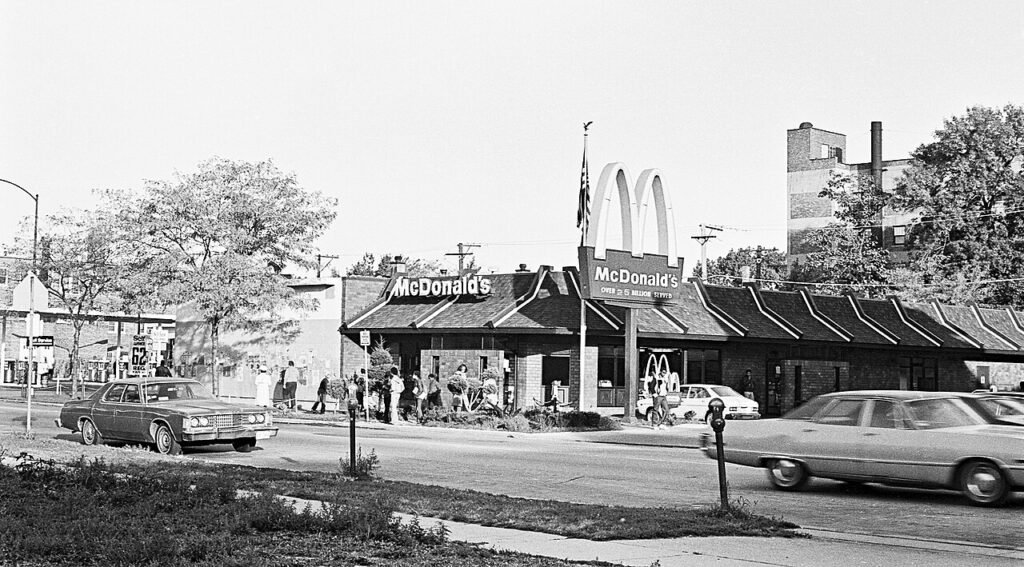
What to take from it. A board at the entrance: “Khachapuri baked today: 186”. Ideally electronic, with a button at the till: sold one, pressed, the number goes up. Or a mechanical split-flap board like the old ones at railway stations, so the digits click over in front of people. You can even let customers press the button themselves; people enjoy that kind of game. A growing number tells passers-by without words: people buy here.
13. The baker’s dozen: the thirteenth one free
In 1266, the English King Henry III revived an old law that tied the price of bread to the price of wheat. A baker who sold bread lighter than the required weight could be fined, put in the pillory or flogged. To avoid the risk, bakers added something extra to each purchase: an extra loaf for a batch of loaves, a small extra piece for a single loaf. That’s how English got the “baker’s dozen”, usually 13. The expression was already recorded at the end of the 16th century, and according to the London bakers’ guild, the custom of giving a little extra survived almost to the present day.
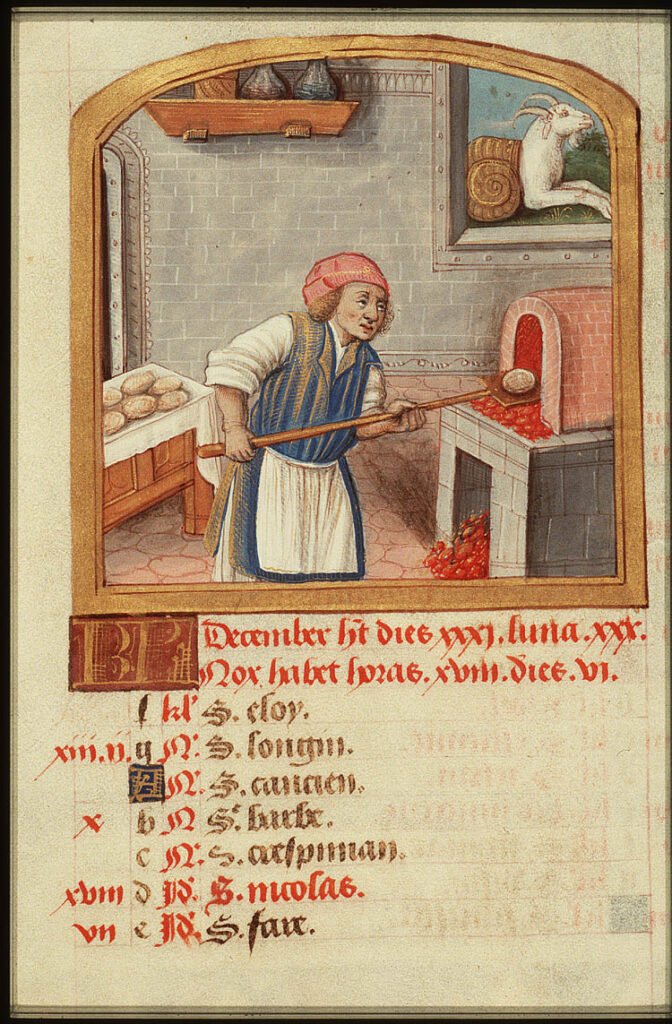
What to take from it. A small extra is remembered longer than any discount: a thirteenth khachapuri for a dozen, or a mini Lobiani with a big order. If you always do it, it becomes your trademark.
How to attract customers to a cafe without an advertising budget
None of these stories started with an advertising campaign. A window shade with lettering, a sticky note on the wall, a box that becomes a bib, an extra loaf with a dozen — all of it cost next to nothing. What worked was something else: the place gave passers-by a reason to stop, look, taste or tell someone else.
Sources
- Krispy Kreme — company history
- Krispy Kreme sign landmark application, Winston-Salem
- Fortune on scent marketing
- Eat This on Cinnabon
- The Takeout on fast food scent marketing
- Encyclopedia.com: Auntie Anne’s
- Franchising.com: Free Pretzel Day
- Pizza Bib — website
- Pizza Bib — story and testimonials
- Pizza Bib on Gust
- Pizza Bib on YouTube
- Bangkok Post on Jay Fai
- Anders Husa on Jay Fai
- Marietta.com: The Big Chicken
- Roadside America: The Big Chicken
- Lake Travis Lifestyle: i love you so much
- Silly America: I Love You So Much Mural
- Lonely Planet: I Love You So Much Mural
- Big Texan — our story
- Barry Popik: Big Texan
- Mental Floss: Taco Tuesday
- PMQ: Rosa’s Fresh Pizza
- Good Things Guy: Rosa’s Fresh Pizza
- PA Eats: Rosa’s Fresh Pizza
- The Takeout on secret menus
- Fox News: Animal Style
- Marketplace: McDonald’s counter
- Phrases.org.uk: Baker’s dozen