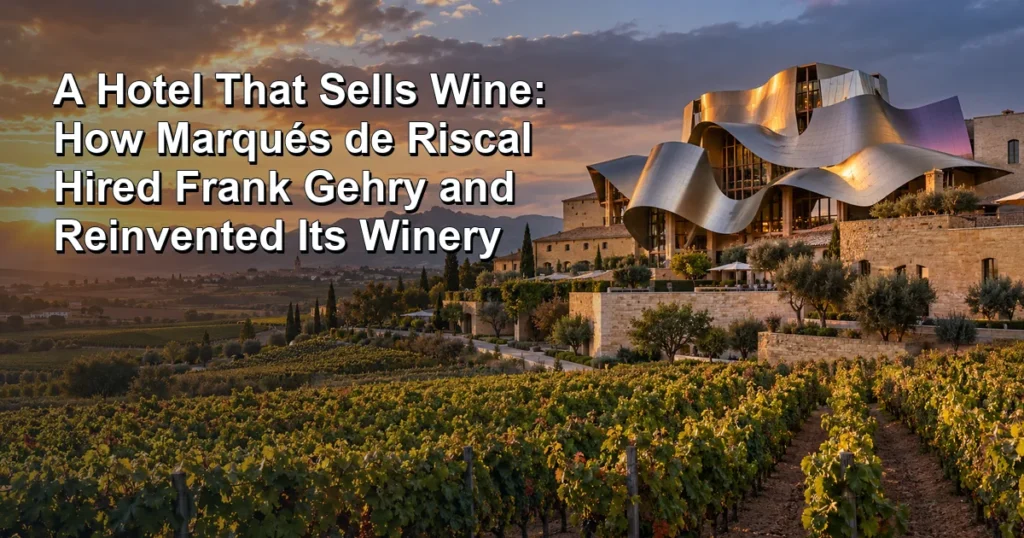
Wine tourism can start with a single building. In the late 1990s, one of Rioja’s oldest wineries had no quality problem. Its problem was attention: people knew the name, but it had stopped being news. The fix came not from the cellar but from architecture. Here is what worked, what it paid back, and what Georgian winemakers and hoteliers can take from the story.
Where it started
Herederos del Marqués de Riscal was founded in 1858 in Elciego, a small town in the Rioja Alavesa area of northern Spain. By the end of the nineties its wines were sold in 76 countries. Yet the market was shifting. Spanish drinkers were increasingly reaching for beer, and competition on shelves abroad kept getting tougher. The family business decided to renew everything at once: production, product and image.
In 2000 the company launched an internal strategy called Project 2000. Its role model was little more than an hour’s drive away. In Bilbao, Frank Gehry’s Guggenheim Museum had put a city that had seen hard times onto the global tourist map. The winery’s owners wanted the same effect at home.
How Gehry was won over
According to the hotel itself, the team pitched the idea to the architect over a glass of 1929 wine, the year he was born. Gehry had never designed a hotel set inside a wine estate, and the challenge hooked him.
The brief was to bring heritage and novelty together in one complex while staying faithful to an estate more than a century old.
What they built
The result is the City of Wine. Next to the historic cellars now stand a hotel, two restaurants, a museum of viticulture, a spa built around wine therapy, a conference centre, a banquet hall and a library.
The hotel is the centrepiece. Its roof is a tangle of curving titanium and steel ribbons in three shades, each with a meaning. Pink echoes the colour of the wine, silver stands for the foil over the cork, and gold for the wire mesh that wraps every Riscal bottle. Put simply, the facade works like a label.
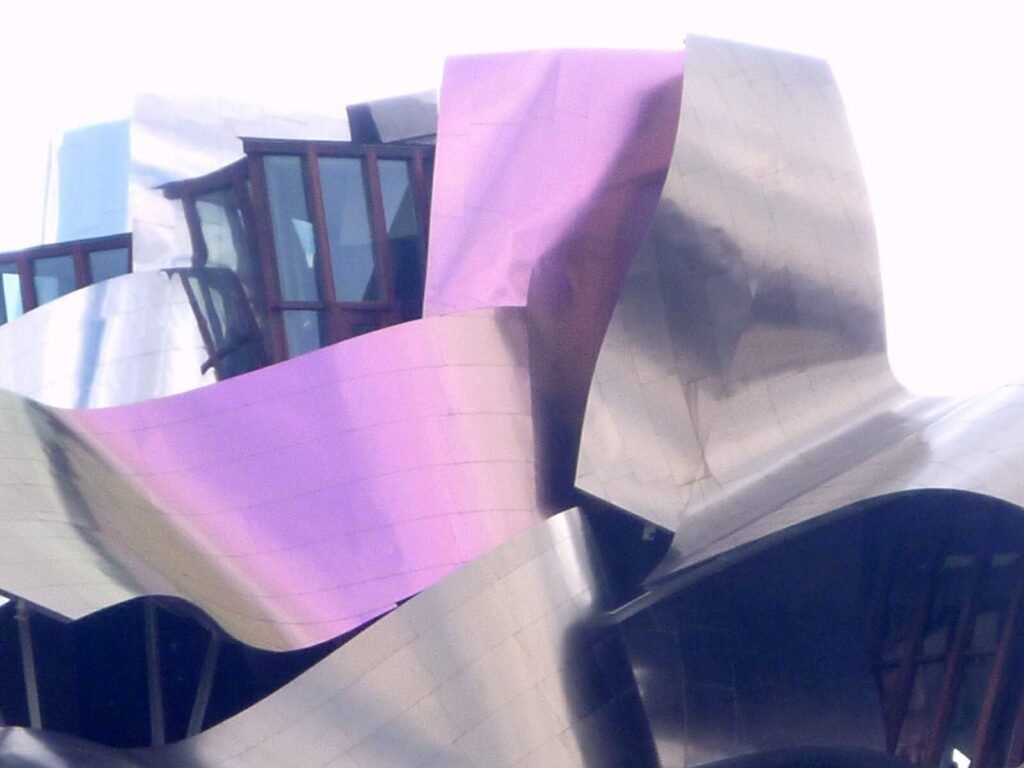
The hotel welcomed its first guests on 1 September 2006, and King Juan Carlos of Spain attended the grand opening that October. Today it has 61 rooms, each with its own layout.
Not everything in-house
One detail is easy to miss: the company never tried to run every business line itself. Marriott operates the hotel under The Luxury Collection brand, the spa went to the French skincare house Caudalie, and Michelin-starred chef Francis Paniego leads the kitchens. On the wine side, from 1998 the estate worked with consultant Paul Pontallier, who had spent fifteen years running Château Margaux.
At the same time, technology was upgraded at every stage of production. For the restaurant trade, the winery created a three-day oenology course that turns sommeliers and waiters into ambassadors for the brand. In 2008 it even added a helipad on site to serve a new, wealthier type of visitor.
What wine tourism delivered, in numbers
In 2024, economists from the University of the Basque Country published an analysis of the case in the journal European Countryside. Their key findings follow.
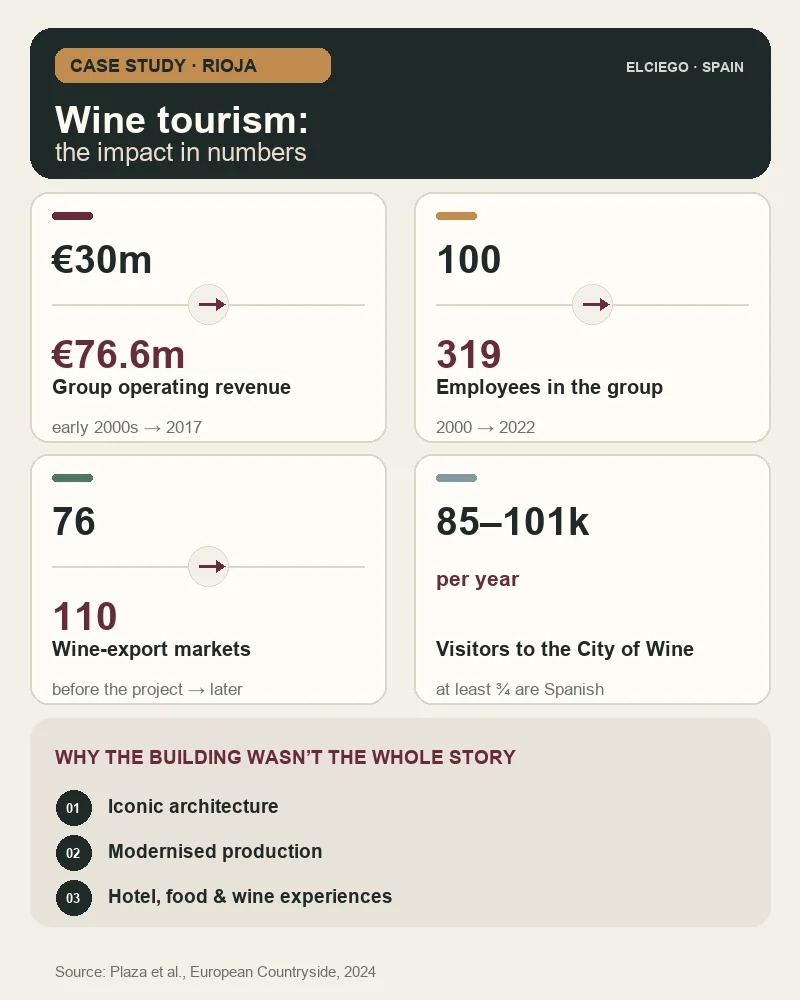
Since opening in 2006, the City of Wine has drawn between 85,000 and 101,000 visitors a year, at least three quarters of them from Spain.
Online interest in the hotel pulls visitors to the winery. A one-point rise in the hotel’s Google Trends index is linked to roughly 160 extra monthly visits. A statistical test showed that the influence runs from the hotel to the winery rather than the other way round.
The group’s operating income grew from about 30 million euros in the early 2000s to 76.6 million in 2017. According to the authors, the winery’s profitability has held steady at 20 to 25 percent.
Production capacity rose by around 60 percent to 10.5 million bottles a year. The number of export markets climbed from 76 to 110, and about 70 percent of output is now shipped abroad.
Headcount across the group went from 100 people in 2000 to 319 in 2022.
In Elciego itself, the service sector’s share of gross value added jumped from 13.9 percent to 36.6 percent.
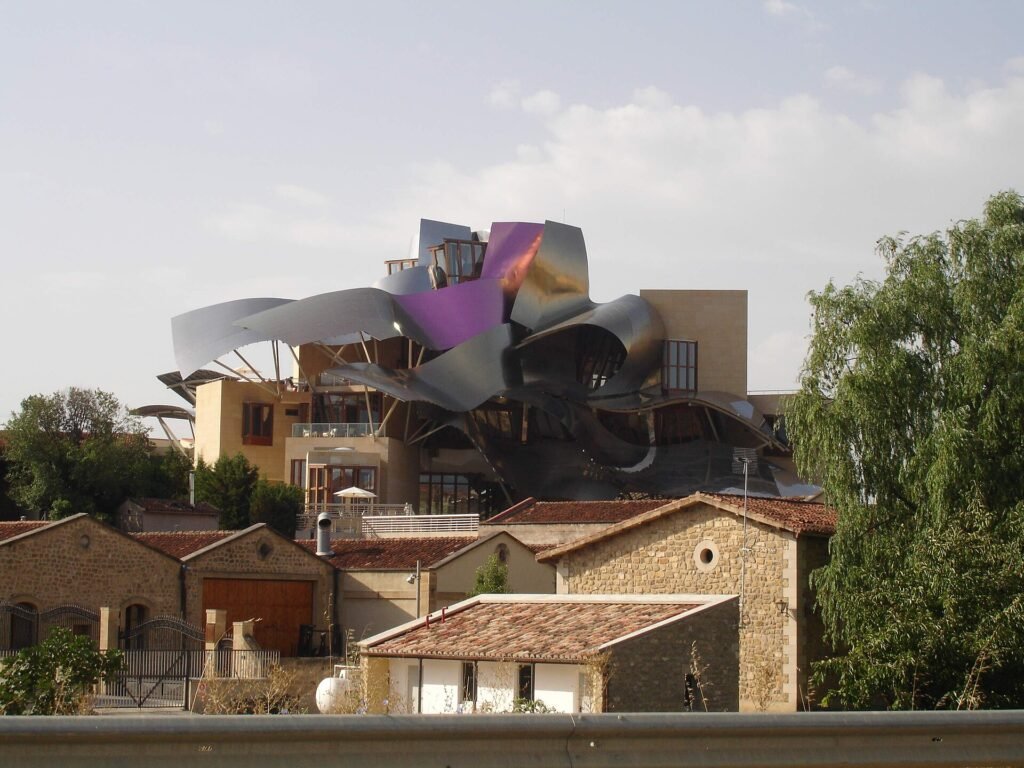
The impact spread beyond the estate’s walls: wine tourism lifted the whole area. The medieval town of Laguardia, six kilometres away, drew more attention, and new wine routes appeared across the area.
The catches
The researchers are frank: betting on signature architecture is expensive and high-risk. The building also did not work alone. It worked together with modernised production, new wines and strong specialist operators.
Travellers have complaints too. Euskoguide, a travel guide to the Basque Country, notes that visitors who are not hotel guests are kept at a distance from the Gehry building during tours, even though many come precisely to see it.
Wine tourism in Georgia: how to use this
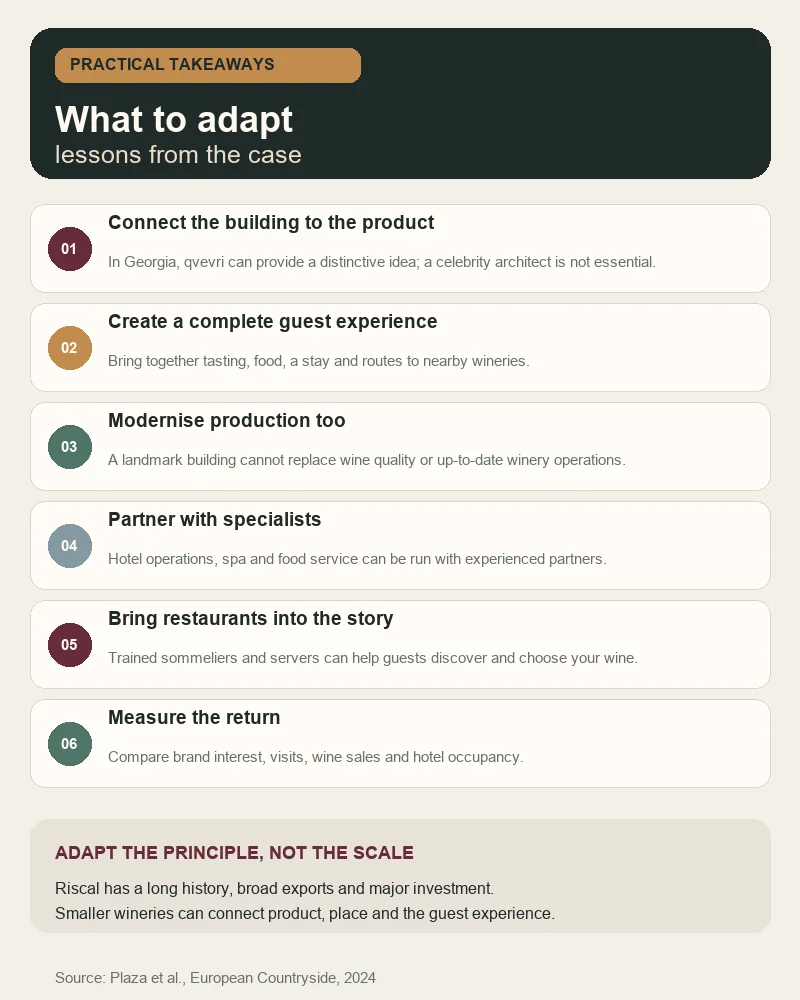
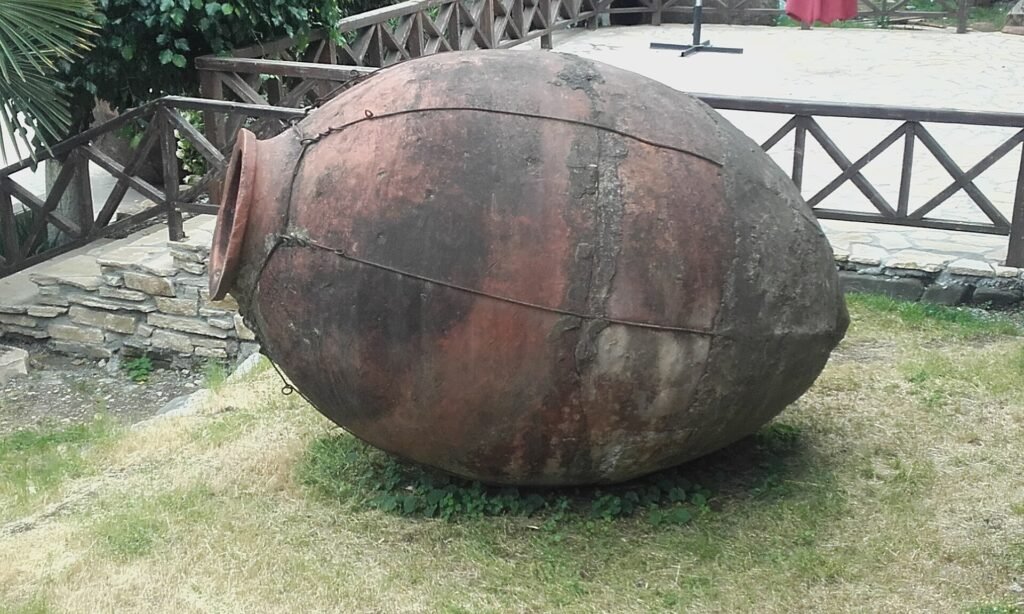
Let the architecture tell the product’s story. A global star architect is optional. What matters is that the building’s shape and materials point back to the wine, the way Riscal’s titanium colours do. Georgia already has a recognisable symbol of its own: the qvevri. UNESCO added the traditional qvevri winemaking method to its list of the Intangible Cultural Heritage of Humanity in 2013. A tasting room or guesthouse whose design plays on the qvevri is a ready-made visual story for social media and the press.
Treat a winery hotel as a sales tool for wine, not just a stock of rooms. At Riscal, growth came in three lines at once: wine, hospitality and wine tourism. Direct sales also reduce dependence on booking platforms, which spend billions on advertising, as our breakdown of Booking, Expedia and Airbnb marketing spend shows.
Hand specialist functions to professionals. Spa, kitchen, room operations: there is no need to run it all yourself. A management company or a strong chef can cost less than your own mistakes. The opposite route is a small team in which everyone can do everything and earns a share of revenue, as at Botanique, the Brazilian hotel without departments.
See restaurants as a sales channel. Training sommeliers and waiters turns them into people who recommend your wine to guests.
Measure the effect. Even a small property can track search interest in its name and compare it with guest numbers and sales. That is exactly how the researchers proved the payoff from the Riscal building.
One strong venue lifts a whole district. A shared route with neighbouring wineries, guesthouses and restaurants benefits everyone on it.
What does not transfer directly: Riscal has a century and a half of history, exports to dozens of countries and a budget big enough for Gehry. A smaller estate should borrow the principle, linking building, product and story, rather than the scale.