
Restaurant prices in Georgia rose noticeably over the summer of 2026: eating out now takes a visibly bigger bite out of your budget. While some are busy counting the percentages, the prime minister assembled an entire commission to find who was to blame for the price hikes — and came up empty-handed. Here’s what’s actually happening with prices, and what restaurants and cafés should do about it.
We collect stories about how prices, demand and the rules of the game are changing for Georgia’s restaurants and cafés in our HoReCa news section.
How Much Restaurant Prices in Georgia Have Risen
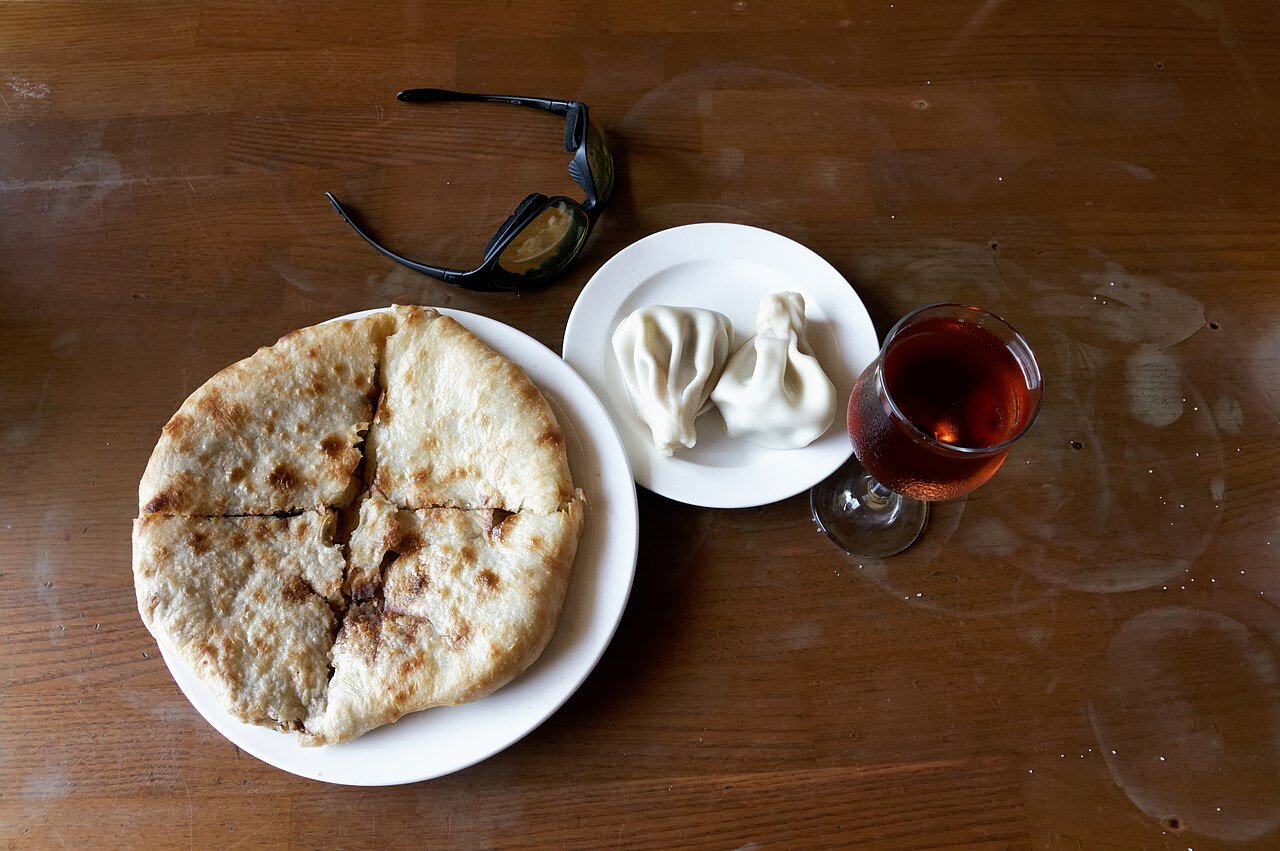
Official statistics confirm the number: according to the National Statistics Office of Georgia (Geostat), over the year — from June 2025 to June 2026 — the average bill at cafés and restaurants rose by 11%. It shows up even more clearly in individual dishes: khachapuri now costs guests 9–10% more than before, khinkali is up 8%, and a glass of beer at a bar costs 10% more. Coffee barely moved — up just 4%. By July, the agency recorded the same pattern across the whole industry: restaurants and hotels were among the categories rising fastest, alongside transport and utilities.

Where the Increase Is Coming From
The National Bank explains the reason for this jump in restaurant prices in Georgia — and it has nothing to do with the appetites of local restaurateurs specifically. The real culprit is the worldwide rise in oil prices: supply disruptions and geopolitical instability have pushed up fuel costs for virtually everyone who transports or cooks anything.
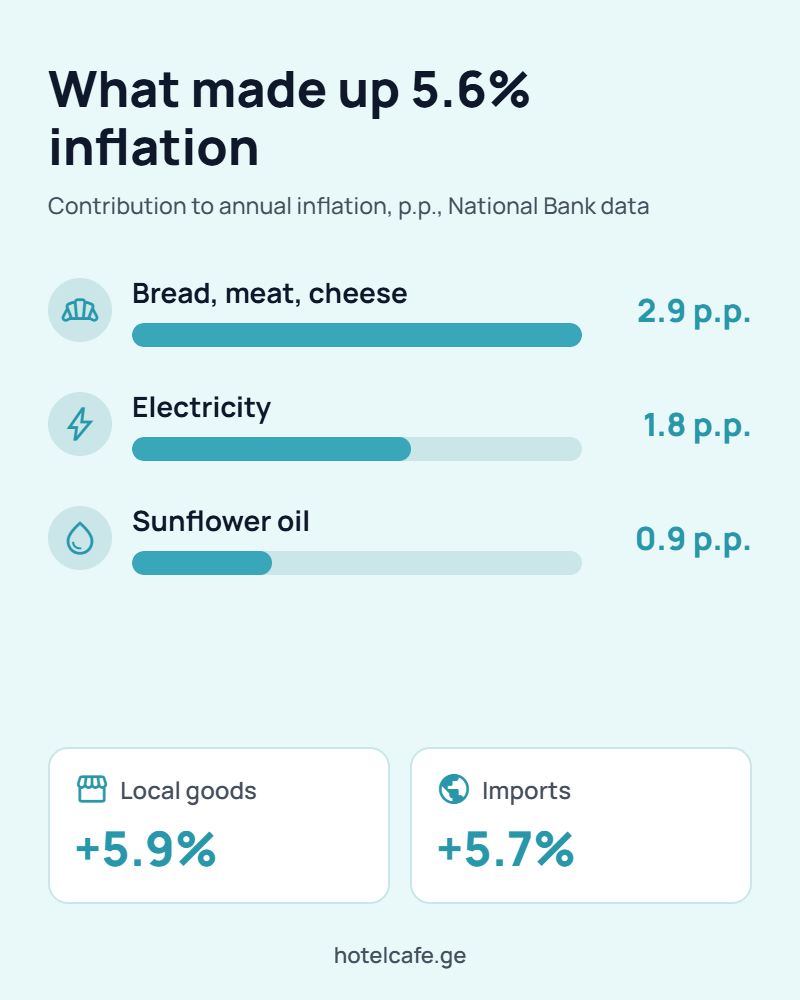
In August, annual inflation reached 5.6%, and the lion’s share of that increase came from three groups of goods: bread, meat and cheese (2.9 percentage points combined), electricity (1.8 points) and sunflower oil (0.9 points). A curious detail: domestically produced goods are actually getting more expensive faster (5.9%) than imported ones (5.7%) — so it isn’t only about imported goods, but also about Georgian producers’ own rising costs.
On top of that comes another factor — wages. In the first quarter of 2026, according to Geostat, the average salary in Georgia’s business sector rose by 166 GEL to reach 2,336 GEL, while companies’ total spending on staff jumped by 11%. For food service, where cooks’ and waiters’ wages are one of the biggest expense items, that’s another direct reason menu prices keep creeping up.
The Government Went Looking for Someone to Blame — and Found No One
In December 2025, Prime Minister Irakli Kobakhidze assembled a special commission of the ministers of economy, finance, agriculture and health, together with representatives of retail chains and producers, to hunt for “illogical markups” along the supply chain. The State Security Service even seized documents from major retailers and distributors while checking the theory of price collusion.
The outcome was unexpected: no specific culprits were found. The commission concluded that Georgia’s retail market is competitive enough, that markups are spread across the whole supply chain, and that profitability matches international norms. The only concrete result was the “Family Basket” program of fixed prices on staple goods — plus one awkward moment, when the prime minister cited a price of 4.60 GEL for a dozen eggs that many consumers called unrealistic.
What This Means for Restaurants and Cafés in Georgia
Since restaurant prices in Georgia will likely keep moving with overall inflation, it pays to prepare in advance. Costs really are rising — both the National Bank and Geostat confirm it, this isn’t a story invented by greedy owners. If you do have to raise prices, tell guests plainly why.

Fuel and utilities are a factor you don’t control. Since, according to the National Bank, they are the single biggest driver of inflation, it makes more sense to build regular indexing into your dish-cost calculations, rather than recalculating prices once a year on an ad hoc basis.
The payroll budget also needs revisiting more often. Staff-cost growth nationally averages 11% a year; for a small place in Batumi or Tbilisi with a handful of employees, that’s a noticeable sum, and it’s better to price it into the menu in advance rather than after the fact, once there isn’t enough left over for wages.
The menu should show an honest price. Worth a reminder here: the Competition Agency of Georgia has already required all food-service businesses to show the final price on the menu — including VAT and service charge — instead of the “bare” price of a dish. Since prices are rising anyway, it makes more sense to show guests the honest number upfront than to spring a surprise on the bill.
Small businesses have it hardest. The average salary at small businesses (1,787 GEL) is noticeably lower than at medium and large ones (2,514–2,787 GEL) — meaning small cafés have a smaller cushion for absorbing rising costs. They should be recalculating their costs more often than once a year.
What We Don’t Know
A full picture of where restaurant prices in Georgia go next isn’t available yet: there’s no exact figure for how much restaurants and cafés specifically rose in July — the statistics lump them together with hotels and only point to a trend, not a number. And even the government commission, which had access to retailers’ documents, couldn’t name the exact cause of the price increases. So restaurants and cafés, too, should rely not on a one-off investigation but on their own regular cost recalculations.
Sources
- BM.GE — “Restaurant Lunch Prices Up by 11% in Georgia”: Geostat data for June 2026 on restaurant meals, khachapuri, khinkali, beer and coffee
- Geostat — “Inflation Rate in Georgia, July 2026”: price growth in restaurants and hotels, transport and utilities
- National Bank of Georgia — monetary policy decision of 9 September 2026: 5.6% inflation in August and the role of energy prices
- National Bank of Georgia — Monthly Review, September 2026 (in Georgian): contributions of bread, meat and cheese, electricity and sunflower oil; domestic (5.9%) and imported (5.7%) inflation
- Georgia Today — “Geostat: Business sector salaries rise to 2,336 GEL in Q1”: wages and staff costs by company size
- Georgia Today — “Georgia Blames Supermarket Fees for Rising Food Prices”: the government commission on food prices
- Civil Georgia — “SSSG ‘Seizes Documents’ From Supermarkets, Distribution Companies”: the State Security Service investigation
- SOVA — “Inflation Without Culprits: Outcomes of Georgia’s Price Reduction Commission”: the commission’s conclusions, the “Family Basket” and the egg price remark
- iPress — “Restaurants are required to display prices inclusive of VAT and service charges”: the Competition Agency’s menu price requirement