
The best hotel business books read less like textbooks and more like collections of stories. In one, the head of a world-class restaurant runs outside to buy a $2 hot dog. In another, the co-founder of Ritz-Carlton lets any employee spend up to $2,000 on a single guest. In a third, three young founders keep their startup alive by selling boxes of breakfast cereal. We picked 10 books that make you want to go and improve your own hotel or café. For each one, we explain in plain words what it is about, the one idea worth taking away, and whether a translation exists.
All ten books were written in English. If there is no Russian or Georgian edition yet, we say so under the book.
1. Unreasonable Hospitality by Will Guidara
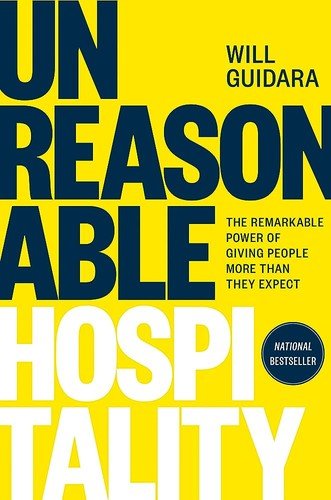
In 2010, Will Guidara was running Eleven Madison Park in New York. One day he overheard tourists at a table say they had eaten at all the famous restaurants in the city but never tried a real New York street hot dog. Guidara went outside, bought one for $2, had the kitchen plate it beautifully, and served it to the table in the middle of an expensive tasting menu. The guests later said it was the highlight of their whole trip (CNBC).
The book is full of stories like this. Guidara draws a clear line: service is what you do for a guest correctly, while hospitality is how the guest feels about it. His restaurant even had a dedicated team member whose job was to dream up small surprises for guests. In 2017, Eleven Madison Park was named the best restaurant in the world by The World’s 50 Best Restaurants.
Key idea: give guests a little more than they expect, and make it personal.
Not yet translated into Russian or Georgian.
2. Setting the Table by Danny Meyer
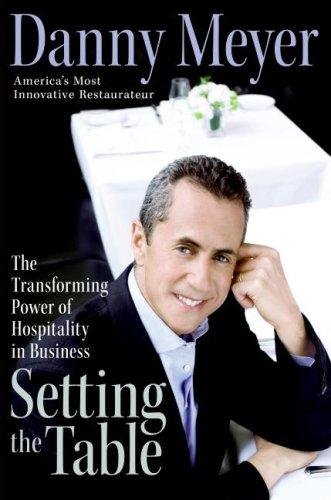
Danny Meyer opened his first restaurant, Union Square Cafe in New York, in 1985. He later created Shake Shack, the burger chain that grew out of a hot dog cart in Madison Square Park. In this book he explains why people fall in love with some places and recommend them to friends, while other places are just somewhere to eat.
The book’s most surprising idea is the order of priorities. Meyer puts employees first, guests second, then the local community, suppliers, and investors last. The logic is simple: a happy team makes guests happy, and happy guests bring in the profit. Meyer calls this approach “enlightened hospitality.”
Key idea: take care of your people first, and they will take care of your guests.
Not yet translated into Russian or Georgian.
3. Excellence Wins by Horst Schulze
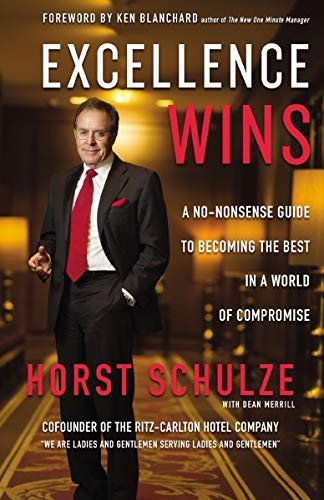
Horst Schulze started out at 14 as a busboy and dishwasher in a hotel. At 16, during an internship, he came up with a phrase that later became the motto of an entire chain: “We are ladies and gentlemen serving ladies and gentlemen.” Schulze went on to become a co-founder and leader of the Ritz-Carlton Hotel Company.
The book’s most famous rule: any Ritz-Carlton employee could spend up to $2,000 to fix a guest’s problem without asking a manager. Schulze explains that this was not generosity but math, because a loyal guest is worth about $200,000 to the company over a lifetime. In practice, staff usually spent very little, such as a complimentary breakfast or a small gift basket (Knowledge at Wharton).
Key idea: give your staff the power to solve a guest’s problem on the spot.
Russian edition: “Ritz-Carlton: pravila biznesa ot osnovatelya seti oteley vysshego klassa” (AST, 2021). Not yet translated into Georgian.
4. Four Seasons: The Story of a Business Philosophy by Isadore Sharp
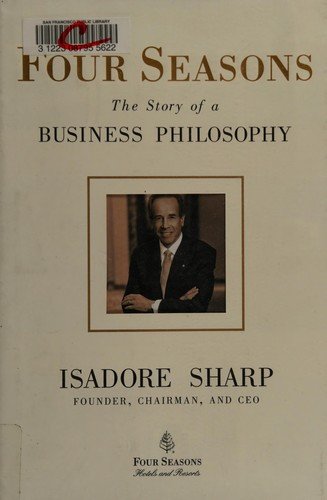
Isadore Sharp was a builder who never planned to become a hotelier. He opened the first Four Seasons in Toronto in 1961, and it was a modest motor hotel. Today Four Seasons is one of the best-known luxury hotel brands in the world.
Sharp was one of the first hoteliers to put shampoo in guest bathrooms, an idea he got from his sisters. He also introduced large cotton towels, even though people warned him guests would steal them (Time). But the heart of the book is not amenities. It is the Golden Rule: treat others the way you would want to be treated. Sharp shows how one simple rule became a working system for thousands of employees around the world.
Key idea: team culture matters more than marble in the lobby.
Not yet translated into Russian or Georgian.
5. Heads in Beds by Jacob Tomsky
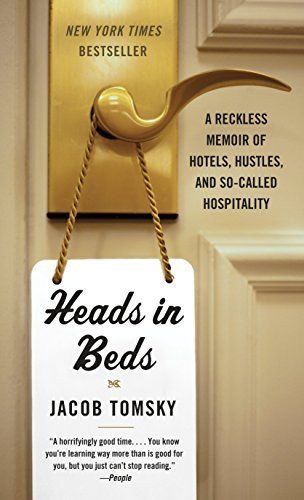
This is the funniest book on the list. Jacob Tomsky spent more than ten years working in hotels, first parking guests’ cars in New Orleans, then working the front desk in New York. He is honest about what hotel staff see, what they keep quiet about, and how a guest can end up in a better room.
The book’s best-known tip is the “twenty-dollar trick”: at check-in, hand the front desk agent a bill along with your ID and politely ask whether any upgrades are available. For a hotelier, the book is useful from the other side. It shows your hotel through the eyes of a tired employee and a savvy guest at the same time.
Key idea: guests notice more than you think, and your frontline staff are the face of the hotel.
Russian edition: “Otel, portye i tri nogi pod krovatyu” (AST, 2013). Not yet translated into Georgian.
6. PEAK by Chip Conley
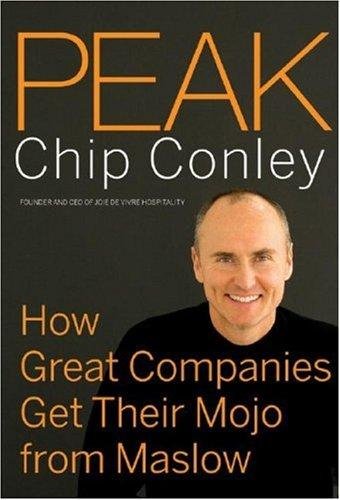
In 1987, on his 26th birthday, Chip Conley founded Joie de Vivre. His first project was a run-down motel in a rough part of San Francisco, which he turned into a rock-and-roll hotel called The Phoenix. Over time it grew into a chain of nearly 40 boutique hotels in California (Hotel Online).
When tourism in San Francisco collapsed in the early 2000s, Conley saved the company using Maslow’s hierarchy of needs, the same pyramid from psychology textbooks. He applied it to employees, guests, and investors. People need more than a paycheck or a clean room: they also want meaning, recognition, and the feeling of being understood. Conley later helped Airbnb learn hospitality.
Key idea: people come back to places that care about them more than the contract requires.
Not yet translated into Russian or Georgian.
7. The Airbnb Story by Leigh Gallagher
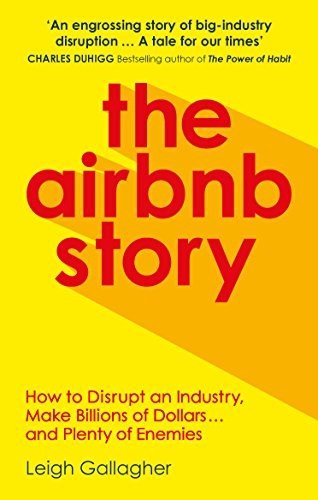
In the fall of 2007, a big design conference came to San Francisco and every hotel in the city was full. Two young designers, Brian Chesky and Joe Gebbia, put air mattresses on their apartment floor and offered visitors a place to sleep plus breakfast. That was the start of AirBed & Breakfast. A third co-founder, Nathan Blecharczyk, joined soon after.
The next part was hard: no money, and investors kept saying no. In 2008 the founders raised about $30,000 by selling boxes of “Obama O’s” and “Cap’n McCain’s” cereal at $40 each (Founded). Fortune editor Leigh Gallagher tells how that gamble became a company that changed the lodging market. For a hotelier, it is also a book about your biggest competitor and why guests choose an apartment over a hotel.
Key idea: guests pay not for a bed, but for the feeling of living like a local.
Russian edition: “Airbnb. Kak tri prostykh parnya sozdali novuyu model biznesa” (Bombora, 2018). Not yet translated into Georgian.
8. Be My Guest by Conrad Hilton
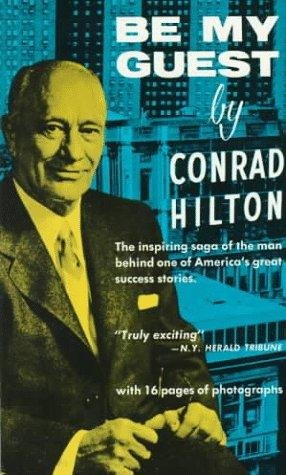
In 1919, Conrad Hilton came to the small Texas town of Cisco to buy a bank. The owner raised the price at the last minute, and Hilton walked away. The local Mobley Hotel had no room for him either: during the oil boom, its 40 beds were rented in eight-hour shifts to match the oil workers’ schedules. Hilton realized a hotel was a better business than a bank and bought it for $40,000. It became the first Hilton hotel (AOGHS).
The autobiography was written in the late 1950s and sounds old-fashioned in places. But it is packed with practical lessons: how to make every square meter earn money, how to survive a crisis while deep in debt, and why an owner needs to know each of their hotels personally.
Key idea: a good hotelier sees opportunity where others see a lack of space.
Not yet translated into Russian or Georgian.
9. The Spirit to Serve: Marriott’s Way by Bill Marriott
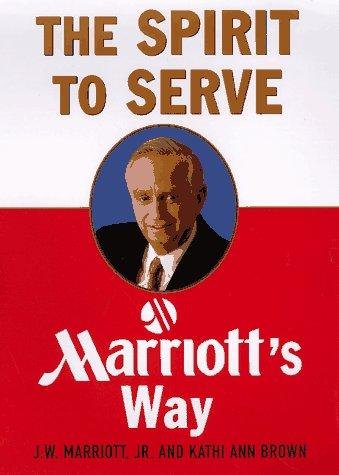
Marriott began in 1927 as a tiny root beer stand in Washington, D.C., opened by J. Willard Marriott and his wife Alice. The family opened its first hotel 30 years later, in 1957. Their son Bill Marriott turned the company into one of the largest hotel chains in the world.
This book is his set of management rules. The most important one came from his father: take care of your employees, and they will take care of your guests. Marriott explains how to hire friendly people, why leaders should visit their hotels in person, and why small details like a clean lobby make all the difference.
Key idea: a big business is built from small daily habits.
Not yet translated into Russian or Georgian.
10. The Heart of Hospitality by Micah Solomon
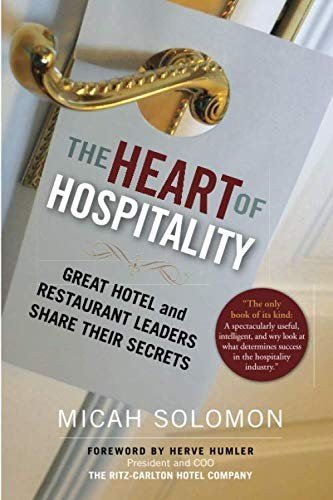
If you want to hear many voices at once, start here. Customer service expert Micah Solomon interviewed Four Seasons founder Isadore Sharp, Danny Meyer, chef Eric Ripert, and leaders of Virgin Hotels and Ritz-Carlton (Porchlight Books). The result is a collection of insider secrets: how to hire and train staff, how to design spaces, and how to serve very different guests, from retirees to millennials.
Key idea: great service is a system, not a lucky accident.
Not yet translated into Russian or Georgian.
How to get the most out of these hotel business books
Read one chapter at a time and test one idea on your next shift. Schulze’s rule is easy to try this week: let your front desk team solve small guest problems on their own, without calling a manager, and see what changes in your reviews.
If you come across unfamiliar terms, check our hotel terms glossary in plain words. And if you are thinking about opening your own hotel, read our guide on how to build a hotel business plan in Georgia.