

The best restaurant business books were not written by economists. They were written by people who worked the stove, the bar, and the dining room. A 52-year-old milkshake-mixer salesman walks into a small burger stand and turns it into McDonald’s. A chef with three Michelin stars hands them back and walks out of the kitchen. A Japanese cook loses a restaurant to a fire, then later opens a new one with Robert De Niro. We collected 10 of these stories. For each book, we explain in plain words what it is about, the one idea worth taking away, and whether a translation exists.
All ten books were written in English. If there is no Russian or Georgian edition yet, we say so under the book.
1. Kitchen Confidential by Anthony Bourdain
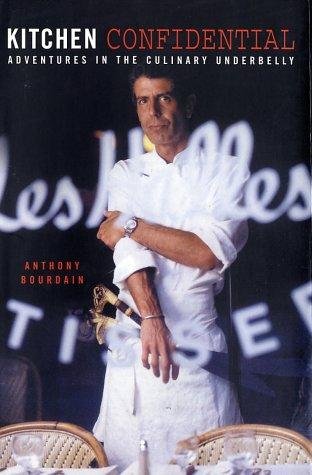
In 1999, Anthony Bourdain, then chef at Les Halles in New York, wrote an article for The New Yorker about what you should never order in a restaurant. It caused a stir. A year later the book came out, Bourdain became a star, and he went on to host TV shows about food and travel.
It is an honest, rough-edged look inside a professional kitchen: the brutal pace of a Saturday night, kitchen slang, pirate-like cooks, and dark humor. Its most famous tips: don’t order fish on Monday, because it was often delivered at the end of the previous week, and don’t ask for a well-done steak, because that guest may get the worst cut.
Key idea: a kitchen runs on discipline and teamwork, not on one chef’s talent.
Russian edition: “O ede. Strogo konfidentsialno” (Eksmo, 2011). Not yet translated into Georgian.
2. Grinding It Out by Ray Kroc
In 1954, 52-year-old Ray Kroc was selling milkshake mixers. A small burger restaurant run by the McDonald brothers in San Bernardino, California, was ordering an unusual number of them, so Kroc went to see what was going on (London Business School). The brothers made burgers like an assembly line: a short menu, everything fast and always the same. Kroc talked them into letting him sell franchises, and in 1961 he bought the whole company from them.
The book is his account of how to build a system that works the same way in thousands of restaurants. Kroc’s motto, “quality, service, cleanliness and value,” is still known to every McDonald’s employee.
Key idea: consistency and standards sell better than a one-time masterpiece.
Russian edition: “McDonald’s. Kak sozdavalas imperiya” (Alpina Publisher). Not yet translated into Georgian.
3. Pour Your Heart Into It by Howard Schultz
In the early 1980s, Howard Schultz worked for Starbucks, a small Seattle company that sold coffee beans. On a business trip to Milan he discovered Italian espresso bars, where baristas know guests by name and people stop in for a coffee and a chat. The Starbucks owners did not want to open cafés, so in 1985 Schultz opened his own coffee bar, Il Giornale. In 1987 he raised $3.8 million and bought Starbucks, which had six stores in Seattle at the time (Starbucks).
The book explains how to make a coffee shop a “third place” between home and work, and why Schultz gave health insurance and company stock even to part-time employees.
Key idea: guests pay for atmosphere and attitude as much as for the drink.
Russian edition: “Kak chashka za chashkoy stroilas Starbucks” (Alpina Publisher). Not yet translated into Georgian.
4. Restaurant Success by the Numbers by Roger Fields
Roger Fields was an accountant who went on to own two restaurants in New York, and now handles the books for restaurants, bars, and nightclubs in the San Francisco Bay Area (Penguin Random House). That makes his book the most practical one on this list: how to choose a concept and a location, build a menu, hire people, and above all work out in advance whether the restaurant will make money.
Read it before you sign a lease. Fields explains in plain language the things that most often sink first-time owners: how much goes to food and staff, how many guests you need to break even, and why a beautiful interior will not save a bad location.
Key idea: a restaurant is numbers first and inspiration second.
Not yet translated into Russian or Georgian.
5. Eat a Peach by David Chang

In 2004, David Chang opened a tiny noodle bar, Momofuku Noodle Bar, in New York’s East Village and worked the line himself (Penguin Random House). It grew into a whole group of Momofuku restaurants. But the book is less about success than about what it cost.
Chang writes openly about depression, fear of failure, luck, and the harsh kitchen culture that breaks people, himself included. It is a rare book about mental health in the restaurant business, and about why leaders should change toxic habits.
Key idea: no restaurant is worth wrecking your health or your team’s.
Not yet translated into Russian or Georgian.
6. The Devil in the Kitchen by Marco Pierre White
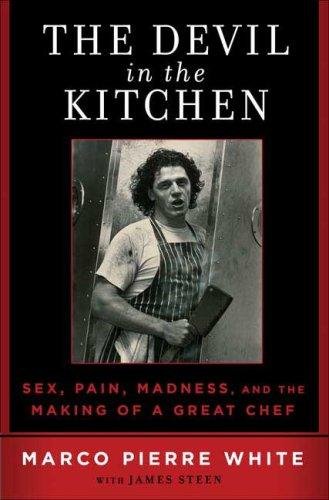
In 1995, Marco Pierre White became the first British chef to win three Michelin stars and the youngest chef in the world to hold them. A young Gordon Ramsay trained in his kitchen and later recalled that White made his cooks cry (Tasting Table).
Then in 1999 White did something nobody expected: he gave back all his stars and left the kitchen. He explained that he had chased the stars for years, worked six days a week, and barely saw his children (Salon). The book is a raw, honest account of what perfectionism costs.
Key idea: high standards matter, but you decide what you are working for.
Not yet translated into Russian or Georgian.
7. Blood, Bones & Butter by Gabrielle Hamilton
Gabrielle Hamilton never went to culinary school. Her degree is an MFA in creative writing. In 1999 she opened Prune, a small restaurant in New York’s East Village, and in 2011 she won the James Beard Award for Best Chef: New York City (Wikipedia).
That is why the book reads like a good novel: a childhood in rural Pennsylvania with huge family parties, years of catering work, and a long road to a restaurant of her own. It shows how an owner’s personal story becomes a restaurant’s character.
Key idea: a restaurant with soul grows out of what matters to you personally.
Not yet translated into Russian or Georgian.
8. Waiter Rant by Steve Dublanica
In 2004, an American waiter started an anonymous blog called Waiter Rant about what really happens in the dining room: rude guests, bad tippers, coworkers’ tricks, and odd managers. The blog took off, the book came out in 2008, and only then did the author reveal his name: Steve Dublanica. The book spent five weeks on the New York Times bestseller list (Wikipedia).
For an owner, it is the best way to hear what servers will never say at a staff meeting: what they think about guests, managers, and you.
Key idea: your servers see your business better than anyone, so ask them.
Not yet translated into Russian or Georgian.
9. Nobu: A Memoir by Nobu Matsuhisa
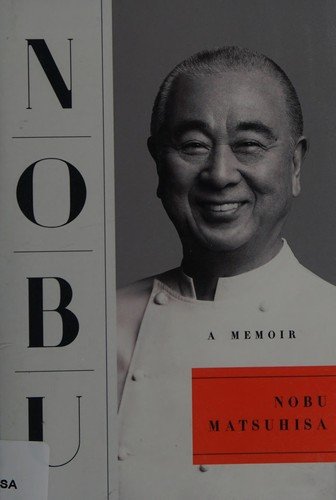
Nobu Matsuhisa’s road started with failures. In 1973 he opened a restaurant in Lima, but it closed three years later. Then came an unsuccessful attempt in Argentina, and his restaurant in Alaska burned down about two weeks after it opened (Wikipedia). It was in Peru that Nobu began blending Japanese cooking with local ingredients, which became his signature style.
In 1987 he opened a small restaurant, Matsuhisa, in Los Angeles. Robert De Niro became a regular and persuaded the chef to open a restaurant in New York. That is how the first Nobu opened in 1994, followed by a whole network of restaurants and hotels around the world.
Key idea: failure is experience, not a verdict.
Not yet translated into Russian or Georgian.
10. 32 Yolks by Eric Ripert
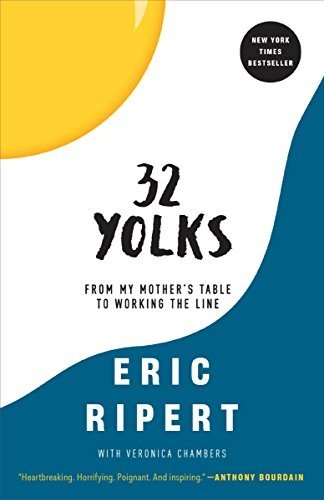
The title is about a first failure. When 17-year-old Eric Ripert started at La Tour d’Argent, a three-Michelin-star restaurant in Paris, he was asked to make a hollandaise sauce with 32 egg yolks. Instead of a light, airy sauce, he ended up with what he calls “pitiful scrambled eggs” (NPR). That was when he understood that mastery takes months and years.
Today Ripert is the chef of New York’s famous Le Bernardin. In interviews about the book, he admits he used to yell at cooks and throw plates, but learned that a frightened cook cooks worse than an inspired one.
Key idea: a kind kitchen works better than a kitchen run on fear.
Not yet translated into Russian or Georgian.
Where to start with these restaurant business books
If you are about to open a café, start with Fields: he will help you count the money before you spend it. For inspiration, pick up Bourdain and Nobu. If you manage a team, read Ripert and Chang.
If you are curious about the hotel side of HoReCa, see our list of hotel business books. For more on how menu prices are changing, read our piece on rising restaurant prices in Georgia, and for plain-language definitions, check our restaurant terms guide.